
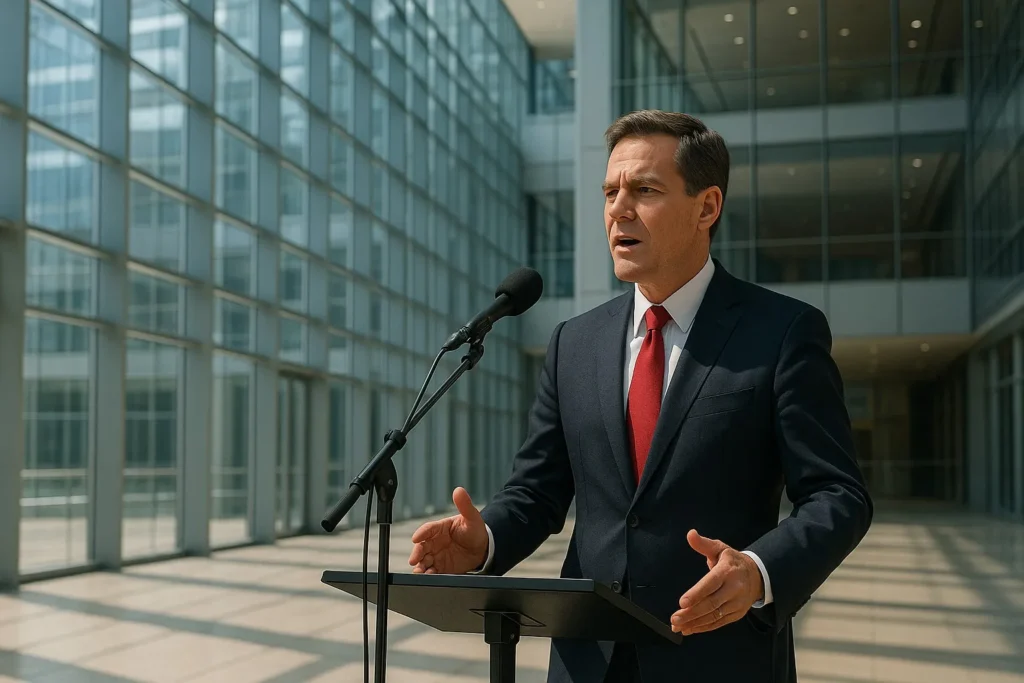
In recent years, many executives have tried to outdo one another by designing spectacular headquarters: glass atriums, floating staircases, sweeping city or ocean views. Behind these temples of light often lies the same ambition: to inspire, and perhaps to impress, employees and visitors alike. According to a study by Jack McGuire and colleagues published in Journal of Organizational Behavior, such grandeur does more than please the eye, it can actually amplify how charismatic a leader appears.
The researchers began with a simple experiment: the same executive delivered the same speech in two different rooms, one ordinary, the other majestic. The result was clear: in the grand hall, participants rated the leader as more charismatic, inspiring, and credible. Not because of better delivery, but because the setting evoked a sense of wonder and significance that people unconsciously projected onto the person at the centre of the scene. In short, the surroundings reflected back onto the leader.
Three additional lab studies confirmed the pattern: impressive and expansive environments boosted perceived charisma for unknown leaders, but not for those already famous for their magnetism. When the speaker was Barack Obama or Nelson Mandela, the backdrop made little difference. But for an ordinary manager, a striking setting could make all the difference.
This may help explain today’s obsession with signature workplaces, those designed to embody the founder’s vision. A monumental lobby or rooftop terrace won’t improve a business strategy, but they can make its leader seem larger than life, at least for a while. The risk, of course, is mistaking architecture for authority: an impressive setting can make a leader appear more inspiring than they truly are.