
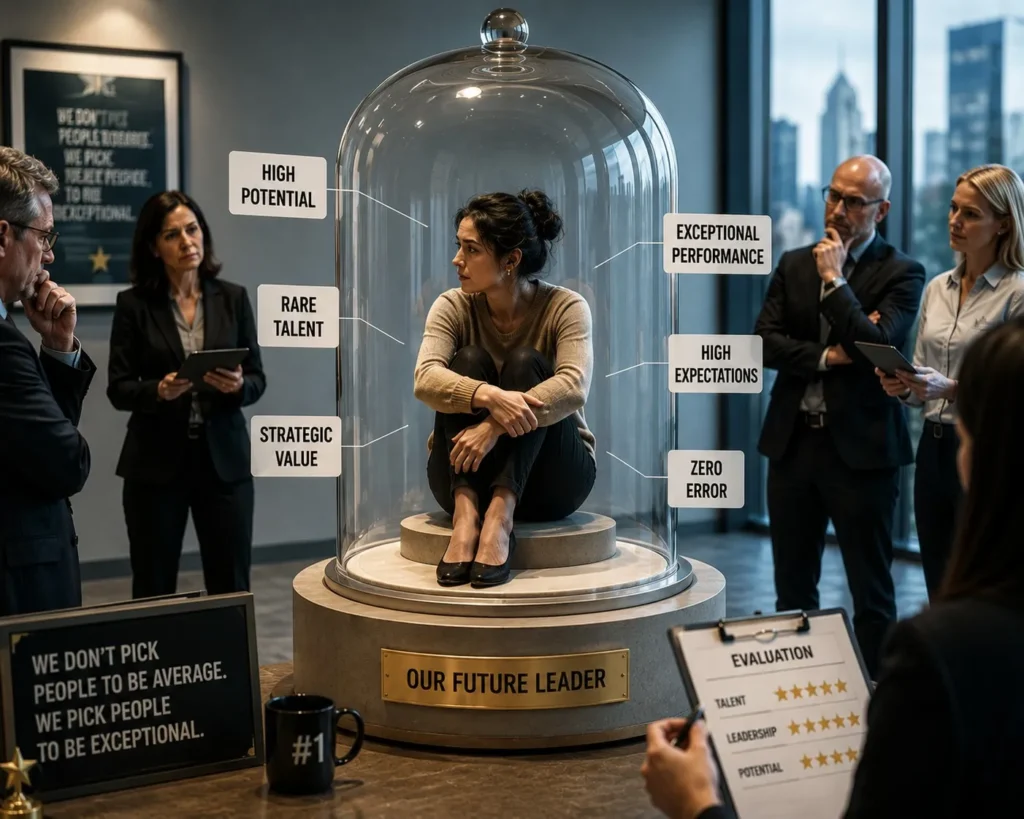
Many people I meet tell me they have impostor syndrome, and that is normal. These are typical thoughts produced by the human mind: it compares, anticipates judgment, scans for signs of social danger, and makes up stories like “soon, they’ll realize I’m not that competent.” The problem is not that this thought appears. The problem begins when the work environment makes it credible, central, and costly.
In an article published in the Journal of Organizational Behavior, Claudia Gomez, B. Yasanthi Perera, Michelle C. Lau, and Khadija Al Arkoubi propose a theoretical typology of the impostor phenomenon in organizations. The authors cross two dimensions: the individual’s mindset, fixed or growth-oriented, and the organization’s mindset, also fixed or growth-oriented. Their model aims to explain why some cultures amplify self-doubt, while others can make it less threatening.
A person who believes competence is fixed is more likely to experience mistakes as evidence of personal inadequacy. If that person also works in an organization that values “real talent,” “A players,” and flawless performance, self-doubt becomes almost logical. Asking for help, learning slowly, or making mistakes can then feel like an admission: maybe I don’t have what it takes. Conversely, an organization that treats abilities as developable does not make impostor thoughts disappear. It does, however, change their status. A mistake becomes information again, not a verdict. The company culture can then not only support workers’ psychological health, but also improve its performance by developing their competence.